
Environmental Engineer Or Scientist Cover Letter Examples And Template
Check out these environmental engineer or scientist cover letter sample and examples previously used by job seekers to land on job interviews as environmental engineer or scientist. Use our AI cover letter generator to create a personalized cover letter as environmental engineer or scientist.
Environmental Engineer Or Scientist Cover Letter Examples
environmental engineer or scientist Cover Letter At EHPG
EHPG
Technical Skills: Engineering Knowledge: A solid foundation in engineering principles is essential
including understanding how natural systems function. Data Analysis: Environmental engineers collect
analyze
and interpret scientific data to identify and solve problems. Environmental Regulations: Staying up-to-date on relevant environmental laws and regulations is crucial. Software Proficiency: Familiarity with relevant software for modeling
design
and data analysis is important. Sustainability Knowledge: Understanding principles of sustainable resource management and energy usage is vital. Risk Assessment: The ability to assess and mitigate environmental risks associated with projects and activities. Interpersonal Skills: Communication: Strong written and verbal communication skills are needed to convey technical information clearly to various stakeholders. Collaboration: Working effectively with other professionals
clients
and communities is essential. Project Management: Planning
organizing
and managing projects from start to finish
including budgeting and timelines. Problem-Solving: The ability to identify
analyze
and propose creative solutions to environmental challenges. Attention to Detail: Environmental engineers must be meticulous in their work to ensure accuracy and compliance. Other Important Skills: Critical Thinking: Analyzing information and making informed decisions. Adaptability: Being able to adapt to new technologies
regulations
and project requirements. Leadership: Some roles may require leadership skills to manage teams and projects effectively. Creativity: Developing innovative solutions to environmental problems. Time Management: Effectively managing time and meeting deadlines.
By Jerry Anae
**Jerry Anae**
[Your Address]
[City, State, Zip]
[Your Email]
[Your Phone Number]
[Date]
PA
EHPG
[Company Address]
[City, State, Zip]
Dear PA,
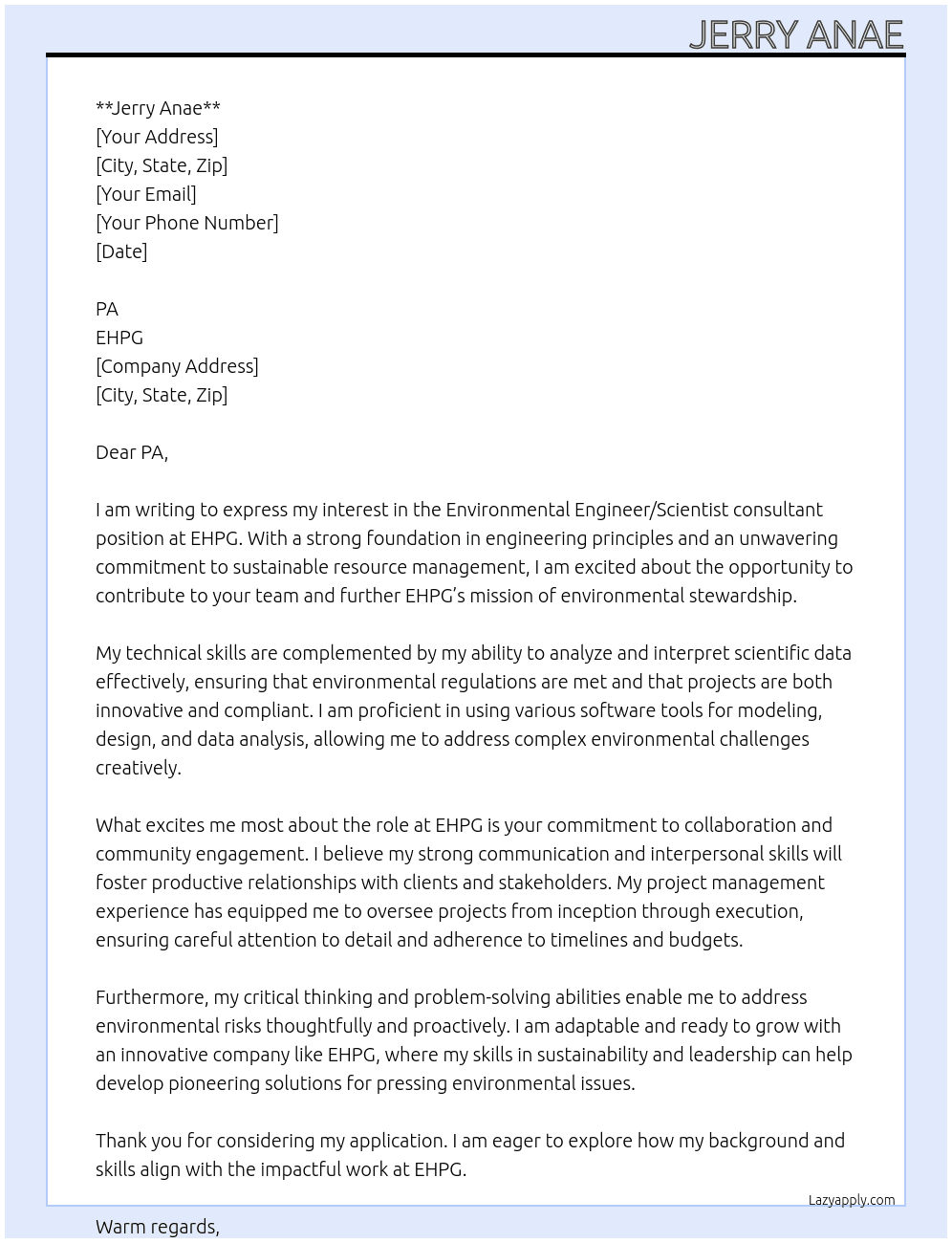
I am writing to express my interest in the Environmental Engineer/Scientist consultant position at EHPG. With a strong foundation in engineering principles and an unwavering commitment to sustainable resource management, I am excited about the opportunity to contribute to your team and further EHPG’s mission of environmental stewardship.
My technical skills are complemented by my ability to analyze and interpret scientific data effectively, ensuring that environmental regulations are met and that projects are both innovative and compliant. I am proficient in using various software tools for modeling, design, and data analysis, allowing me to address complex environmental challenges creatively.
What excites me most about the role at EHPG is your commitment to collaboration and community engagement. I believe my strong communication and interpersonal skills will foster productive relationships with clients and stakeholders. My project management experience has equipped me to oversee projects from inception through execution, ensuring careful attention to detail and adherence to timelines and budgets.
Furthermore, my critical thinking and problem-solving abilities enable me to address environmental risks thoughtfully and proactively. I am adaptable and ready to grow with an innovative company like EHPG, where my skills in sustainability and leadership can help develop pioneering solutions for pressing environmental issues.
Thank you for considering my application. I am eager to explore how my background and skills align with the impactful work at EHPG.
Warm regards,
Jerry Anae
environmental engineer or scientist Cover Letter At cepa
cepa
By jerry anae
[Your Address]
[City, State, Zip]
[Email Address]
[Phone Number]
[Date]
HR Manager
CEPA
[Company Address]
[City, State, Zip]
Dear HR Manager,
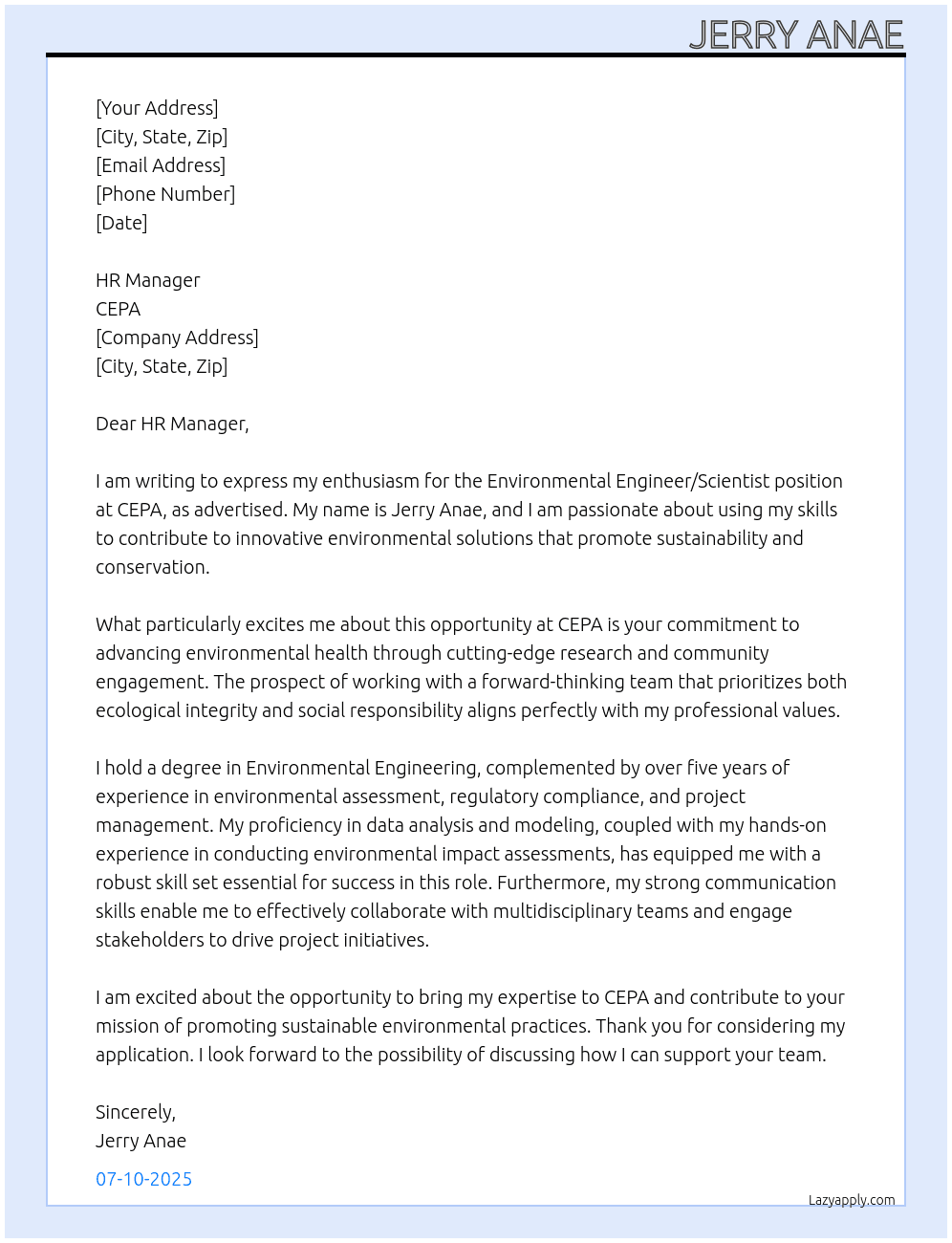
I am writing to express my enthusiasm for the Environmental Engineer/Scientist position at CEPA, as advertised. My name is Jerry Anae, and I am passionate about using my skills to contribute to innovative environmental solutions that promote sustainability and conservation.
What particularly excites me about this opportunity at CEPA is your commitment to advancing environmental health through cutting-edge research and community engagement. The prospect of working with a forward-thinking team that prioritizes both ecological integrity and social responsibility aligns perfectly with my professional values.
I hold a degree in Environmental Engineering, complemented by over five years of experience in environmental assessment, regulatory compliance, and project management. My proficiency in data analysis and modeling, coupled with my hands-on experience in conducting environmental impact assessments, has equipped me with a robust skill set essential for success in this role. Furthermore, my strong communication skills enable me to effectively collaborate with multidisciplinary teams and engage stakeholders to drive project initiatives.
I am excited about the opportunity to bring my expertise to CEPA and contribute to your mission of promoting sustainable environmental practices. Thank you for considering my application. I look forward to the possibility of discussing how I can support your team.
Sincerely,
Jerry Anae